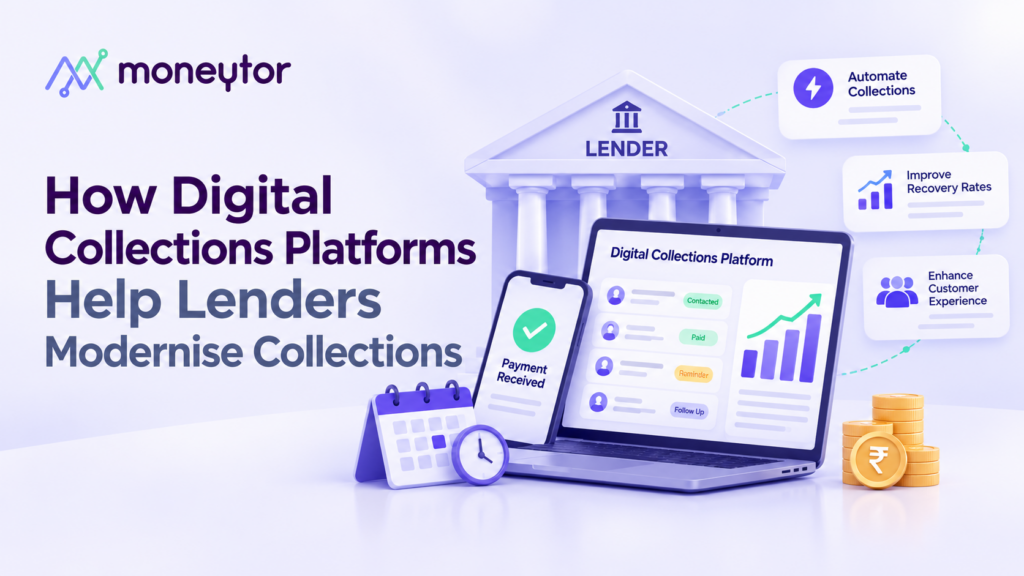
A digital collections platform for lenders is the system that replaces scattered lists with one working record of the overdue book. Digital loan collections then means the borrower can be reached on channels the lender has approved, can pay or accept a settlement the lender has authorised, and the result sits on the case a supervisor can open.
Modernising collections is an operating change. It is the move from a file of phone numbers and a monthly summary to digital collections management: a case, an owner, a next step, a stored reply and a payment the loan system can match. People still handle the decisions a policy reserves. The platform is what makes the routine path consistent and visible.
This guide is for heads of collections and operations at banks, NBFCs and other lenders who are planning that shift. It explains what a lender collections platform changes in the daily book, and how to stage the change on one segment before widening it. Evaluating a CRM field by field, writing workflow rules, or scoring a third-party agency are related projects with their own tests. What any one platform includes still depends on the agreement.
What changes when collections move onto a platform
Traditional recovery often runs as three loose pieces. A list comes out of the loan system. Contact happens in a dialler, a mailbox or a personal chat. The result returns later as a spreadsheet. Digital collections management pulls those pieces onto the case.
A lender that has made the shift can usually answer, for a single borrower:
- Which loans are in the mandate, and what is overdue now.
- Who owns the next action, and whether it is late.
- Which approved message or call went out, and what came back.
- Whether a payment or an authorised settlement has posted.
- Why a case is on hold.
That record is the base. The operating change is what the platform does with it: it decides the next step, it orders the book, it changes the path when the account changes, and it uses the borrower’s own case to choose the contact.
Collection decisioning. Rules the lender writes read the case: product, days past due, amount, last promise, last reply and the time of day. They choose the queue, the owner pattern and the approved template. Officers are left with the cases the rules hold back, such as a settlement that still needs a signature or a hardship request. The routine reminder no longer waits for someone to copy a row into a dialler.
Account prioritisation. The same rules order the day’s work. A broken promise, a higher overdue amount or a stage the policy treats as urgent can sit above a fresh, small arrears item. Supervisors see that order and can change the factors. Staff stop working the file from the top of an unsorted extract.
Dynamic workflows. The path is not a fixed sequence of calls. A payment, a kept promise, a broken promise or a new dispute moves the case to the next step the lender defined for that event. A paid account leaves the contact path. A broken promise opens the follow-up the policy named. The workflow changes with the account.
Personalised borrower engagement. Personalisation here is the lender’s own data on that case, applied through an approved template. The message can carry the product, the amount due and the language or channel the lender has allowed for that borrower. SMS, email, WhatsApp, Telegram, calling and IVR are available only where the lender has switched them on. A template for one product is not reused on another. This is rule-based contact. It is not an open-ended conversation the software invents.
A new channel logo, or a portal with no link to the case, does not by itself change the operation.
Where digital loan collections fits the book
Use the platform on the part of the book where the steps repeat and the policy is already clear.
Early arrears and bounced instalments. The path is a reminder, a short wait, a next attempt and a payment. A digital collections platform can open the case from the loan system, send the template you approved, and stop if the borrower pays or asks for a hold.
Borrowers who will act on a message. SMS, email, WhatsApp, Telegram, calling and IVR can each be a step if you have enabled that channel and approved the words. The case stores the send, the failure and the reply. A channel the lender has not switched on is not part of the programme.
Payments the borrower is ready to make. Digital loan collections closes the gap between “I will pay” and a receipt on the loan. The platform can offer the overdue amount, a part amount, or a settlement you have already authorised. Unmatched receipts go to an exception list so the case is not called as if it were still unpaid.
Several products, one customer. Banks and NBFCs often hold more than one facility for the same person. The platform should show the person and each in-scope account so two teams do not start two conversations.
Leave the first wave of a harder segment for later if the rule is still unsettled: possession, a live legal matter, or a hardship policy that changes case by case. Those cases can sit on the same record with a hold and a human owner. They are a weak place to start automation.
What the platform has to do
Treat the list as the operating standard for digital collections management. Confirm each item for your deployment. A serious provider will say which of them are in your scope.
One borrower and loan record. Collectors and supervisors open the customer, the in-scope loans, the stage, the owner and the history in one place. The loan system remains the source of the amount due. The platform is the source of the work.
Rules for the repeatable steps. A new overdue, a broken promise or a missed callback creates the next task or sends the next approved template. A complaint, a dispute or a settlement that still needs a signature waits. Rules are yours to change, and a change is recorded.
Allocation and follow-up. Each open action has an owner. Supervisors see what is due, what slipped and what nobody owns, by product, language or location if that is how you staff the floor.
Digital contact on approved channels. SMS, email, WhatsApp, Telegram, calling and IVR run only on your templates and inside the hours that apply to that product. A stop on a channel blocks the next use of it.
Responses on the case. A promise, a callback, a dispute and a complaint update the record the next officer sees. The reply does not stay in a personal inbox.
Digital payment and settlement. Authorised amounts can be offered and posted to the loan reference. Concession terms stay with the approver named in your grid.
Activity the head of collections can read. Loaded cases, attempts, contacts, promises, payments, holds and failures open from a total down to accounts.
Connections to the providers you already use. Message and payment providers you contract can feed the case, where that is part of the design. You need the refresh timing and the person who clears a failed send or a broken payment reference. You do not need the vendor’s internal build.
How to modernise without losing control
A lender collections platform widens the number of borrowers you can reach. The conduct duty stays with the institution.
Covered commercial banks currently restrict recovery calls before 8:00 a.m. and after 7:00 p.m. on overdue loans other than microfinance, under the Commercial Banks – Responsible Business Conduct Directions, 2025, updated as on 1 October 2026. NBFCs follow the NBFC Responsible Business Conduct Directions, 2025, updated as on 1 July 2026, including a tighter microfinance window. From 1 January 2027, covered banks and covered NBFCs take up amended recovery rules, including contact between 8:00 a.m. and 7:00 p.m. unless the borrower has expressly agreed otherwise. The texts are the bank Fourth Amendment and the NBFC Third Amendment. Put the window in the platform as a setting compliance can change. Record a complaint on the case. Take that case off the automated path when your rule says a person must review it, and confirm that stop in the workflow you are running.
Stage the shift.
- Pick one segment. One product, one stage, one language is enough to learn the path.
- Write the steps that may run and the steps that must wait. Share that note with collections, credit and compliance.
- Connect the loan balance and one payment path before you add every channel. A message that quotes a stale amount undoes the change.
- Run the segment beside the old list for a short period. Compare ownership, failed sends, unmatched payments and complaints. Then retire the old list for that segment.
- Add a channel or a second product only after that segment reconciles.
Outsourcing the platform to a vendor does not move responsibility. Banks under the Commercial Banks – Managing Risks in Outsourcing Directions, 2025 and NBFCs under the NBFC Managing Risks in Outsourcing Directions, 2025 remain responsible for the activity and for customer information a provider holds. Confirm which chapters apply to your category and layer, including IT outsourcing. Keep a way to export cases and history if you leave.
Do not treat a digital programme as a promise of a recovery rate or a cost saving. Judge it on whether the segment is complete, current and supervisable.
How Moneytor supports a digital collections shift
Moneytor provides a digital collections platform lenders use to run this operating model for stressed retail credit. Moneytor licenses the intellectual property as source code. The lender receives a licensed copy of the product source code, deploys that technology in its own infrastructure, and customises the workflows for its operations, its products and the systems it already runs. The deployment is the lender’s. Workflows are changed in that copy for that institution. An operating brief, where Moneytor staff work a segment, is a separate contract.
The technology on that copy is decisioning and automation, not a stored list. Rules prioritise accounts, choose the next step, and move the case when a payment, a promise or a dispute arrives. Approved templates carry the product and the amount for that borrower. Repayment and settlement steps run for amounts the lender has authorised, and they post through the payment provider the lender names. Message providers the lender already uses can send the contact and return the result to the case.
Bring the first segment you want to move, the channels you will allow, the infrastructure it must run on, and the decisions that must stay with your officers. What you see in a working session is the scope to agree. A channel or a workflow that is not in that session is outside the offer.
Where the engagement includes them, the platform can support:
- A licensed source-code copy deployed in the lender’s infrastructure and adapted to its loan, card, communication and payment systems.
- Central borrower and account management for each facility placed in scope, with status, owner and history. A combined view of two products follows the identity match confirmed for that integration.
- Automated collection decisioning that selects the queue, the priority and the approved template from the lender’s rules.
- Dynamic workflows that move the case when the account changes, including a payment received, a broken promise or a new dispute, and that leave a reserved decision with a person.
- Personalised engagement through the template and channel allowed for that borrower, using the product, the amount due and the language the lender has set.
- Allocation and follow-up tracking so each action has an owner and ageing is visible.
- Digital contact by SMS, email, WhatsApp, Telegram, calling and IVR, on the lender’s templates and inside the hours for that product, with replies stored on the case.
- Response and complaint tracking for promises, disputes and complaints. A complaint is logged with an owner. An automatic stop on later messages is included only where that workflow has been confirmed for the deployment.
- Automated repayment and settlement workflows for amounts the lender has authorised, posted to the account reference, with an exception path when the receipt does not match.
- Activity reporting for the segment being modernised, traceable to accounts.
- Integration with the lender’s communication and payment providers, so a send and a receipt return to the case, including providers the lender already contracts, where that connection is part of the design.
Moneytor does not take the lender’s credit policy or regulatory duty. Commercial terms, the source-code licence and the live set are agreed per institution. To see a segment move off the old list, use moneytor.in or contact@moneytor.in and ask for a walk-through of a prioritised queue, one automated contact, a repayment posted through the lender’s payment provider, and a complaint logged on the case.
Frequently asked questions
What is a digital collections platform for lenders?
It is the system a bank, NBFC or other lender uses to run overdue accounts as cases: the record, the next action, approved digital contact, the reply, and the payment. It replaces side lists and after-the-fact summaries for the segment you place on it.
What does digital loan collections include?
An up-to-date case, a message or call on a channel you have approved, a reply stored on that case, and a way for the borrower to pay an amount you allow, with the receipt matched to the loan. Staff still own policy, approvals and exceptions.
Which channels belong on a lender collections platform?
SMS, email, WhatsApp, Telegram, calling and IVR can each be part of digital collections management if you enable them and approve the templates. Hours, recording duties and a stop request still apply, and they differ for banks, NBFCs and microfinance.
How should a lender start the shift?
Move one product and one stage first. Connect the balance and one payment path, write which steps may run on their own, and compare ownership, failed messages and unmatched payments with the old list. Widen only after that segment reconciles.
Can the same platform serve bank officers and a partner team?
Yes, if both work the cases your supervisors can see. The platform is the record. Who speaks to the borrower is a separate choice. A partner does not remove the lender’s responsibility for conduct and for customer information.
How are settlements handled?
The platform can open a request and, after your approver sets the terms, offer that settlement and post the receipt. It should not let an agent invent a concession. Cases that need a individual review stay on hold.
Does a digital platform guarantee better recovery?
No measure of recovery should be assumed from the software alone. Judge the programme on complete cases, current balances, owned follow-ups, contact that follows your rules, and payments that match the loan system.
How can a lender review Moneytor’s platform?
Contact Moneytor through moneytor.in or contact@moneytor.in. Bring one segment, the infrastructure the licensed source-code copy must run on, the channels you will allow, and a decision you will keep with an officer. Ask to watch prioritisation, one automated contact, and a repayment posted through your payment provider. Treat the session as the scope to confirm.
Conclusion
A digital collections platform helps lenders modernise collections when the overdue book becomes a case the institution can see and direct. Digital contact, digital payment and a supervisor’s view belong on that case, inside rules the lender still owns.
Moneytor licenses that platform as a source-code copy the lender deploys in its own infrastructure and adapts to its operations. In the agreed scope it covers decisioning, account prioritisation, dynamic workflows, personalised contact, allocation, multichannel engagement, response tracking, automated repayment and settlement, activity reporting, and connections to the lender’s communication and payment providers. Start with one segment and a working walk-through before you retire the old list.